Key points
- Seoul says it is ready to deploy stabilization funds and loosen share-buyback limits.
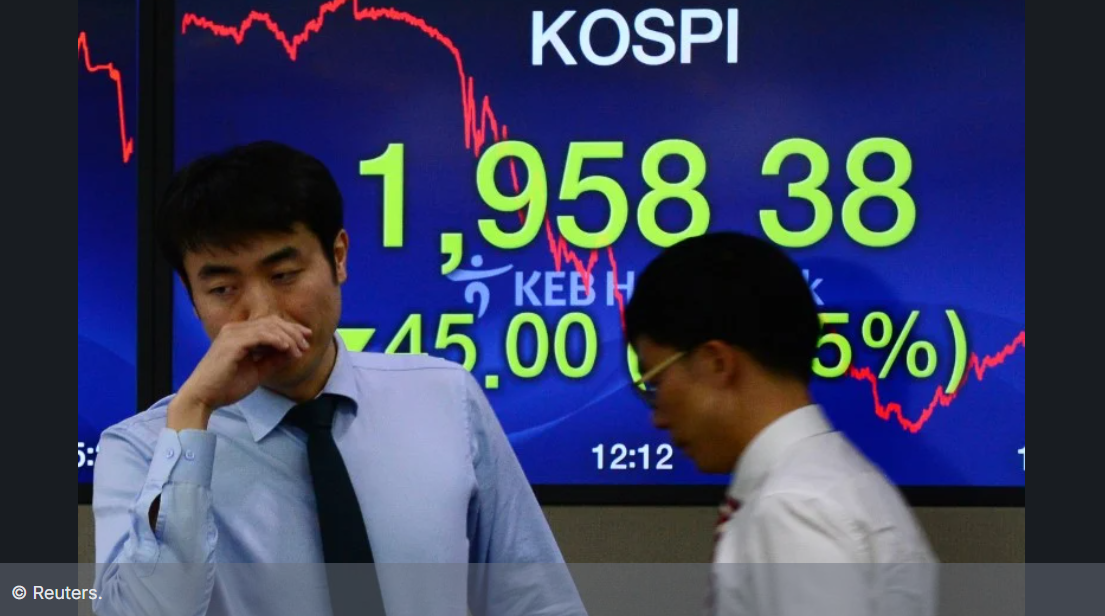
- The KOSPI fell more than 5% Friday to a 10-month low and is down over 40% from its June peak.
- Taiwan’s $15 billion fund is buying after the Taiex’s worst week since 1991.
- The KOSPI fell as much as 4.5% early Monday.
Update, Monday morning in Seoul: The KOSPI slid as much as 4.5% in early trading on Monday despite the government’s pledge, Al Jazeera reported, while U.S. stock futures rose about 2%.
South Korea’s finance ministry said on Sunday it was preparing to deploy securities market stabilization funds immediately if conditions keep deteriorating, after the KOSPI index fell to a 10-month low, Reuters reported. The pledge makes South Korea the second Asian government in two days to step in as the global sell-off in artificial-intelligence stocks hits the region’s chip-heavy markets hardest.
Preparation work “will immediately begin so that securities market stabilisation funds can be activated immediately depending on market conditions,” the ministry said in a statement after Finance Minister Lee Hyoung-il held an emergency meeting with other economic policymakers.
What Seoul announced
- Stabilization funds on standby. Funds that buy shares to steady the market can be activated immediately.
- Looser buyback rules. The daily limit on share buybacks by listed companies will be loosened for three months, letting companies support their own stock.
- Margin calls. Officials will closely monitor leveraged investments and margin calls to ease forced selling.
- Short selling. Authorities will act against illegal short selling and other market-disrupting behavior.
How far the KOSPI has fallen
The KOSPI fell more than 5% on Friday to its lowest close since Jan. 16, Reuters reported. The index has dropped more than 40% from its June peak, after more than doubling in the first half of the year in a world-beating rally led by chipmakers Samsung Electronics and SK Hynix.
The slide has been steady, not sudden. On Nov. 17, the KOSPI fell for a fourth straight day, dropping 2.59% to 4,968.48 and falling below the 5,000 level, Korea JoongAng Daily reported. Samsung Electronics fell 3.3% that day to 190,300 won, and SK Hynix fell 1.96% to 1.1 million won.
Why Korea is taking the hardest hit
South Korea is one of the most concentrated bets on AI hardware in the world. Samsung Electronics and SK Hynix supply the memory chips used in AI servers, and the two companies make up a large share of the KOSPI. When investors question whether AI spending will pay off, as they did last week, those shares fall first and drag the whole index with them.
Leverage has made the decline steeper. After the first-half rally drew in retail investors, many bought on borrowed money. As prices fall, brokers demand more collateral, and investors who cannot pay are forced to sell, adding to the decline. That is why the government singled out margin calls.
The same forces are at work in Taiwan, home to Taiwan Semiconductor Manufacturing Co. Taiwanese authorities ordered tighter short-selling rules on Saturday, and the finance ministry said its $15 billion stock stabilization fund had already entered the market, Reuters reported. The Taiex fell 18% last week, its worst week since 1991, according to Market Index.
Can a stabilization fund stop the slide?
History suggests these funds work more as a signal than as a source of buying power. South Korea has rarely spent its stabilization funds, mostly using them to calm investor sentiment, including during the Covid-19 pandemic, Reuters reported. In March 2020, the government announced a 10.7 trillion won stock market stabilization fund, financed by financial companies and institutions including the Korea Exchange, according to the Financial Services Commission. In 2022, officials readied a fund of about 10 trillion won, which the Korea Herald reported had never been used because markets rebounded.
A fund of that size is small compared with the total value of the Korean stock market. Its value lies in showing that the government stands ready to buy, which can discourage panic selling. Monday’s early losses suggest investors want to see whether the selling in U.S. tech stocks stops first.
What to watch
- Whether the government actually activates the fund, and how much it commits.
- Foreign investor flows in Samsung Electronics and SK Hynix.
- The U.S. cash session on Monday: a sustained rebound in Nasdaq chip stocks would likely ease pressure on Seoul and Taipei.
- Dell Technologies’ results on Tuesday, a read on demand for AI servers and memory.
Sources: Reuters via Business Standard; Al Jazeera; Korea JoongAng Daily (Yonhap); Market Index; Financial Services Commission; The Korea Herald.
 Full author profile →