Key points
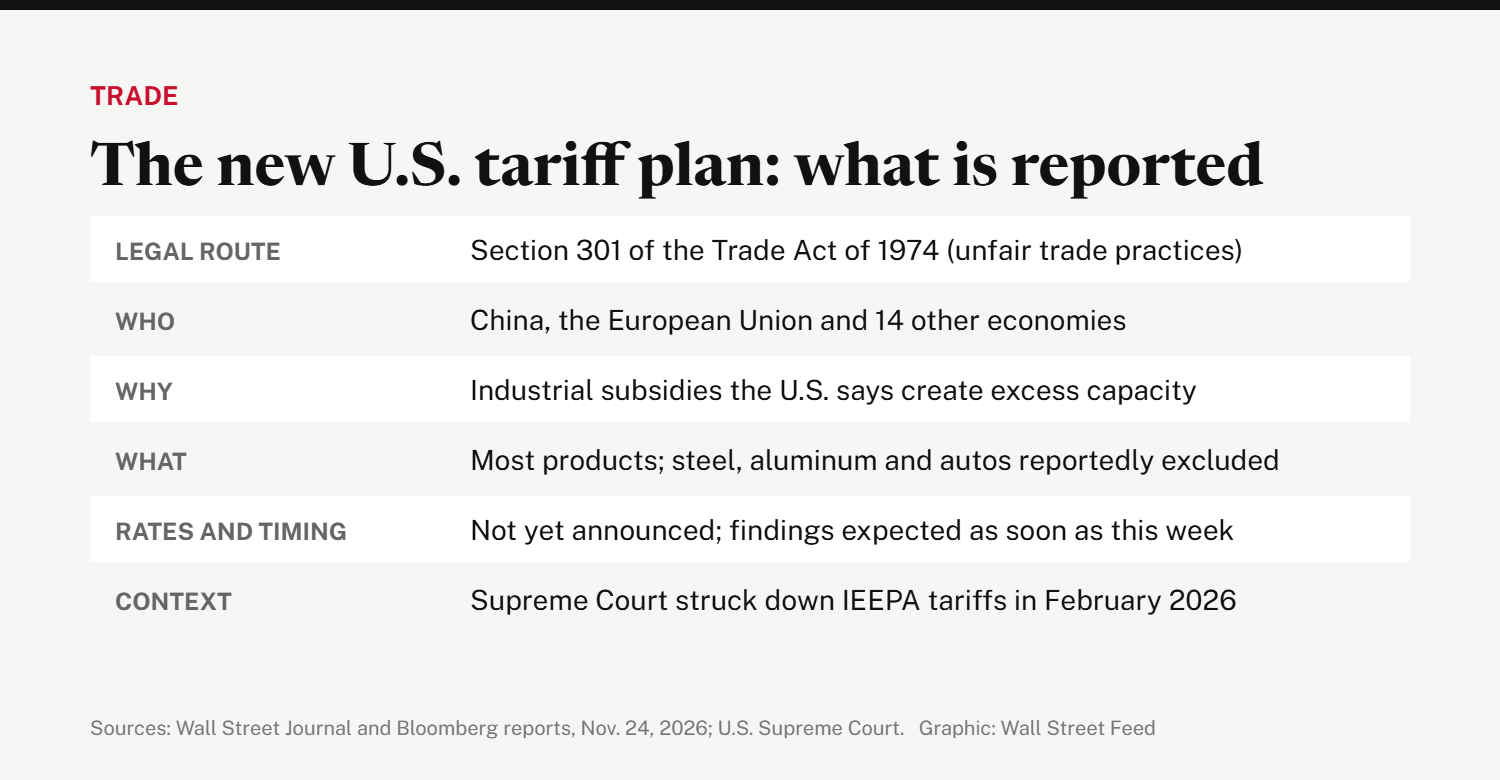
- The U.S. is preparing new tariffs on China, the European Union and 14 other economies over industrial subsidies, the Wall Street Journal reported.
- Trade Representative Jamieson Greer could announce the findings as soon as Tuesday; rates and start dates have not been disclosed.
- The plan uses Section 301 of U.S. trade law, a different legal route from the emergency tariffs the Supreme Court struck down in February.
- New duties would add to inflation pressure just as the Fed weighs another rate increase on Dec. 9.
Update, 9:45 p.m. ET: As of Tuesday evening the trade representative’s office had not formally announced the findings or rates. According to the Wall Street Journal, economies that already struck trade deals, such as the EU, Japan and South Korea, would likely receive the rates they negotiated before the emergency tariffs were struck down, with a maximum of 15%, while China, India and Vietnam could face higher duties. Many of these economies already pay Section 301 duties of 10% to 12.5% from an earlier action this year.
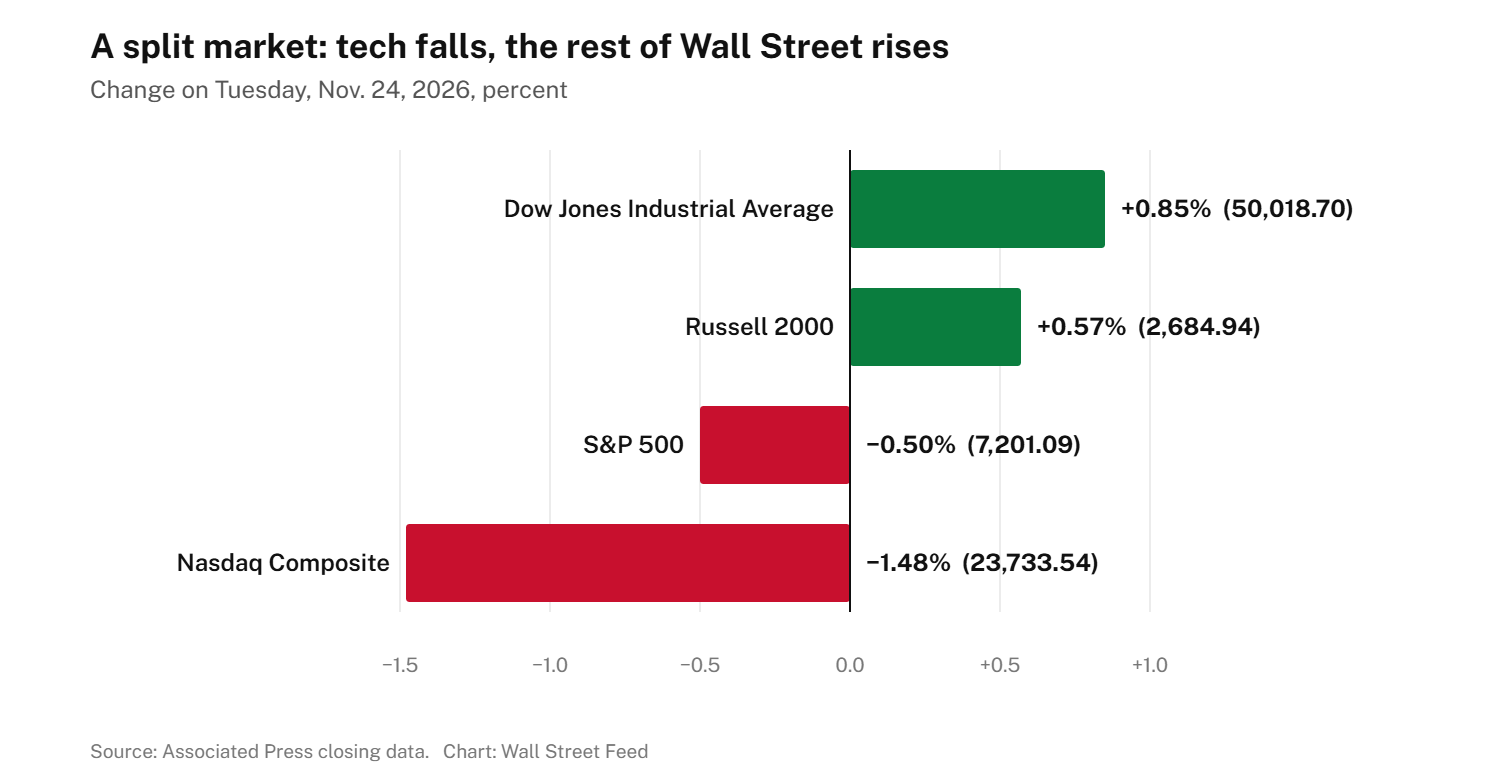
The Trump administration is preparing to raise tariffs on China, the European Union and 14 other economies that it says unfairly support their own industries, the Wall Street Journal reported on Tuesday. The report added pressure to a stock market that was already giving back part of Monday’s record rally.
U.S. Trade Representative Jamieson Greer is expected to release the findings of a monthslong investigation into foreign industrial subsidies as soon as this week, according to the Journal. Bloomberg reported that the announcement could come as soon as Tuesday, but that tariff rates and an effective date are still unclear. The new duties would cover most products from the targeted economies, with steel, aluminum and autos excluded, the Journal reported.
Why this route matters
In February the Supreme Court ruled in Learning Resources v. Trump that the International Emergency Economic Powers Act does not allow the president to impose tariffs. That decision struck down the broad emergency tariffs of 2025.
Section 301 of the Trade Act of 1974 is different. It is a power Congress gave the executive branch specifically to respond to unfair foreign trade practices, and it requires an investigation and formal findings before tariffs are imposed. It is the same law used for the tariffs on Chinese goods during President Trump’s first term, which courts upheld. The investigation now being completed was launched in March, according to people familiar with the planning cited by Time News.
For businesses and investors, the practical difference is durability. Tariffs built on a completed Section 301 process are harder to overturn in court than emergency tariffs were, so companies may treat them as longer lasting when they plan supply chains and prices.
Who is exposed
- Retailers and importers that source goods from China and Southeast Asia face higher costs, just as Abercrombie & Fitch, Kohl’s and Best Buy reported strong quarters on Tuesday.
- Technology hardware with Asian supply chains, including the chip and server companies that led Monday’s rally.
- Europe, Japan and South Korea, major U.S. trading partners whose exporters would face new costs. The exclusion of autos, steel and aluminum, which already face separate duties, narrows the impact on those industries.
Analysis: the inflation problem
The timing is awkward for the Federal Reserve. Money markets fully price a quarter-point rate increase on Dec. 9, and New York Fed President John Williams said this week that he expects inflation to end the year around 3.5% and not return to 2% until 2028. Tariffs raise the price of imported goods, so a new round would push in the wrong direction for the Fed.
Much depends on the details. Section 301 actions usually go through a public comment period before duties take effect, which could give trading partners time to negotiate and give companies time to adjust. Rates also matter: a modest tariff on allies would have a much smaller effect on prices than a steep one on China.
Markets are likely to treat the announcement in two steps: first the headline, then the fine print on rates, timing and exemptions. Tuesday’s modest reaction suggests investors are waiting for the second step.
What to watch
- The USTR announcement, possibly as soon as Tuesday evening, and the rates for each economy.
- Responses from Beijing, Brussels and Tokyo, including any threat of retaliation.
- Wednesday’s October PCE inflation report, the Fed’s preferred measure, before the Dec. 9 decision.
Sources: Wall Street Journal (via WWD, Political Wire, Anadolu Agency and MLQ.ai); Bloomberg (via Quartz); Time News; U.S. Supreme Court, Learning Resources, Inc. v. Trump (2026); CME FedWatch. Details of the tariff plan are based on reports and have not been officially announced.
 Full author profile →