Key points
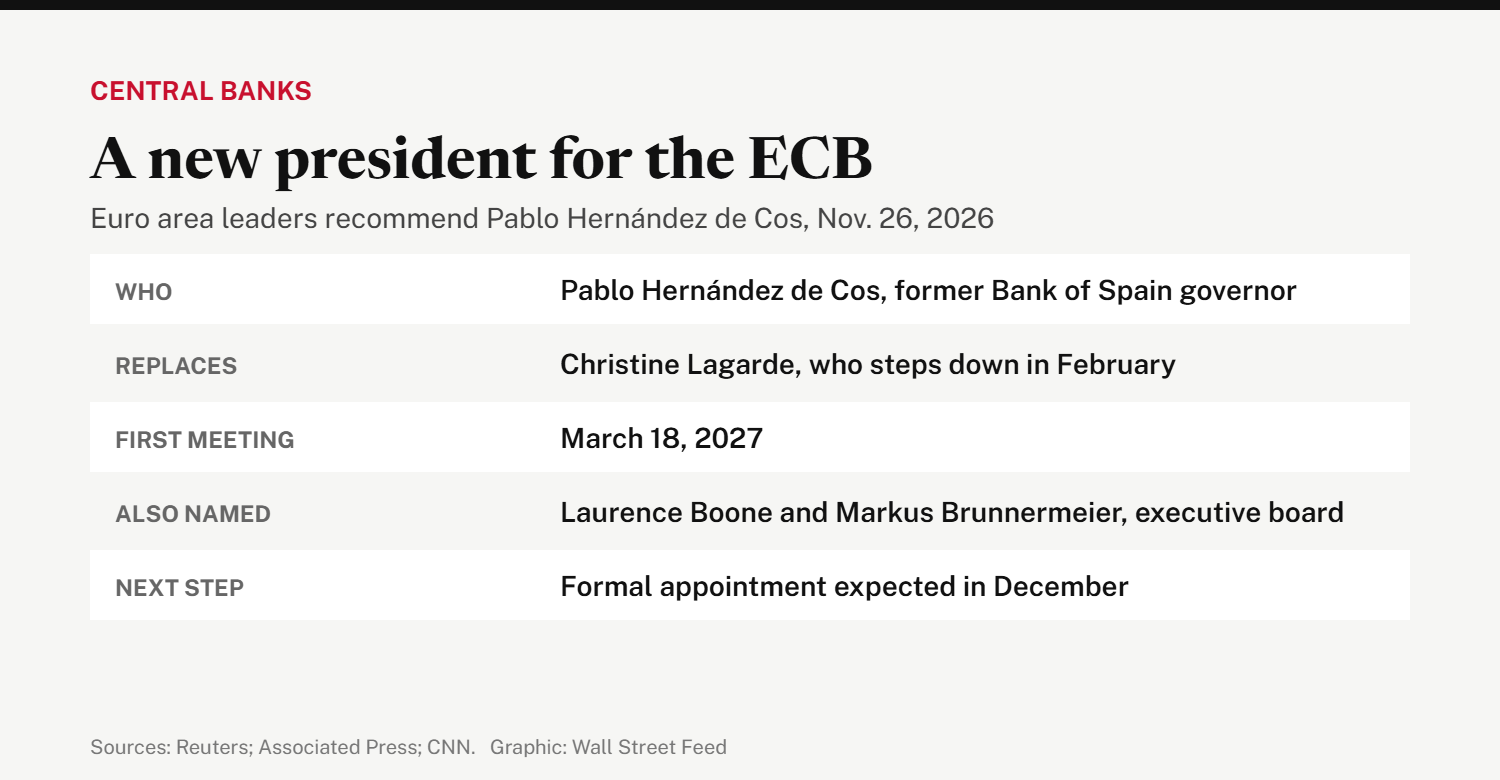
- Euro area countries agreed to recommend Pablo Hernández de Cos, a former governor of the Bank of Spain, as the next president of the European Central Bank.
- He would be the first Spaniard to lead the ECB, succeeding Christine Lagarde when she steps down in February; his first policy meeting would be March 18.
- The Netherlands backed him on Thursday, standing down its own candidate, Klaas Knot. A formal appointment is expected in December.
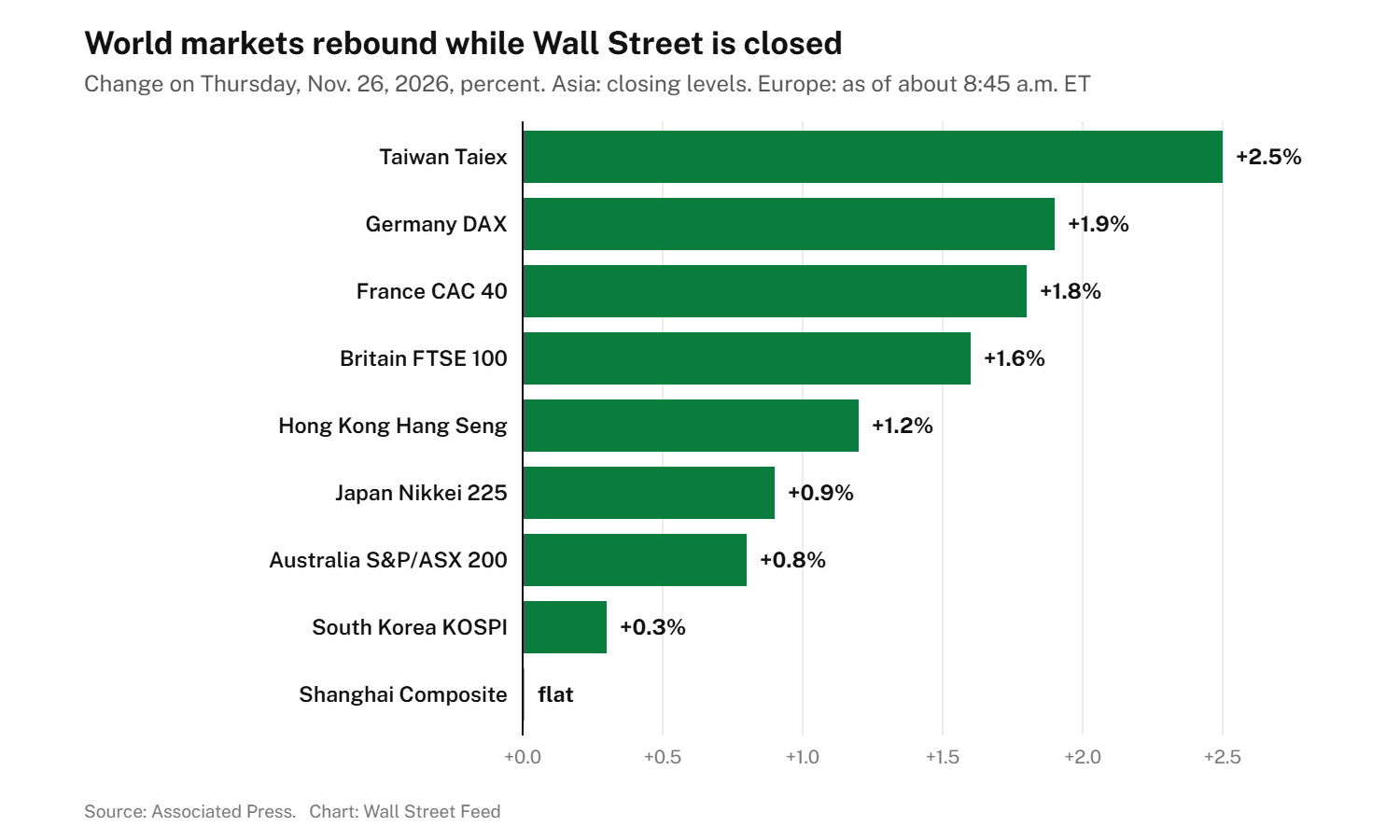
- Investors read the choice as a sign of policy continuity; European stocks rose about 1.8%.
Euro area member states agreed on Thursday to recommend Pablo Hernández de Cos as the next president of the European Central Bank, European Council President António Costa said, according to Reuters. Leaders also recommended Laurence Boone and Markus Brunnermeier as members of the ECB’s executive board.
Hernández de Cos, a former governor of the Bank of Spain, would be the first Spaniard to lead the ECB, CNN reported. He would succeed Christine Lagarde when she steps down in February, and he is set to chair his first policy meeting on March 18, Reuters reported. French President Emmanuel Macron confirmed the choice on X. The appointment still needs formal approval, which is expected in December.
How the choice was made
The path cleared on Thursday when the Netherlands decided to back Hernández de Cos, effectively standing down its own candidate, former Dutch central bank chief Klaas Knot, according to Reuters. The appointment hands the top job to a southern European policymaker and an ally of former ECB President Mario Draghi.
Hernández de Cos led the Bank of Spain from 2018 to 2024 and chaired the Basel Committee on Banking Supervision, the global body that sets bank capital standards. He has since served as general manager of the Bank for International Settlements in Basel.
What he inherits
The ECB faces inflation driven by the war in Iran, along with worries about high government debt and borrowing costs in Europe, the Associated Press reported. Higher energy prices push inflation up, while heavy borrowing by some euro area governments makes them sensitive to higher interest rates. Balancing those pressures is the central challenge for the next president.
Analysis: why markets welcomed it
Investors generally prefer predictability from central banks, and the choice signals continuity. European stocks rose sharply on Thursday, with the Stoxx 600 up about 1.8%, and a Reuters report linked part of the gain to confidence in the ECB’s leadership as well as easing worries about U.S. tariffs.
Hernández de Cos is seen as a technocrat with deep experience in both monetary policy and bank regulation. That profile matters at a time when the ECB may have to decide whether to raise rates to fight energy-driven inflation without destabilizing the bond markets of highly indebted countries. A Draghi ally from southern Europe is likely to be attentive to that second risk, which may reassure bond investors in countries such as Italy and Spain.
For U.S. investors, the ECB matters through the dollar and global bond yields. With the Federal Reserve expected to raise rates on Dec. 9, the gap between U.S. and European policy will shape currency moves and capital flows into 2027.
What to watch
- Formal approval of the appointment, expected in December.
- The ECB’s final policy meeting of the year in December, one of Lagarde’s last before she steps down.
- Moves in Italian and Spanish government bond yields.
Sources: Reuters via AOL and Global Banking & Finance Review; Associated Press via The Washington Times; CNN; France 24; Bloomberg; Reuters via The Business Times. Biographical details: Bank for International Settlements and Bank of Spain public records.
 Full author profile →